Instagram Didn’t Create Perimenopause — It Created Awareness
And honestly?
It’s about time. Because for years, women have been walking around exhausted, anxious, wired-but tired, gaining weight around the middle, sleeping badly, snapping at people they love, forgetting words mid-sentence, losing motivation, feeling disconnected from themselves, and wondering what on earth happened.
And far too often, they were told it was stress. Or age. Or being busy. Or “just hormones.” Or my personal favourite: “That’s just part of being a woman.”
No. Let’s not do that anymore.
For our mothers and grandmothers, the story was often very different. Many of them just got on with it because that was what they were expected to do.
They pushed through.
They kept the house running.
They raised the children.
They worked.
They cared for everyone else.
They didn’t have the language, the support, or the permission to say, “Actually, something feels really off here.” Symptoms were brushed aside as being emotional, dramatic, tired, stressed, ageing, or simply not coping well enough. And because no one was talking about it properly, many women thought they were the only ones.
That silence did a lot of damage.
Now, things are changing. Women today are asking different questions. We Google things at 11pm. We listen to podcasts while driving. We follow experts. We read captions. We compare notes with friends. We send reels to each other with the message, “Is this me?” We are joining the dots in a way previous generations often weren’t able to.
And yes, for many women, the first time they hear someone describe what they are experiencing is not in a doctor’s office. It’s on Instagram. A 30-second reel might be the first time a woman hears someone say, “Brain fog can be hormonal.” Or, “That sudden anxiety you’ve never had before? It could be perimenopause.” Or, “Poor sleep, rage, weight gain around the middle, exhaustion, inflammation, low mood, loss of motivation, and feeling like you’ve lost yourself can all be part of the picture.” And suddenly she thinks: “Hang on. That’s happening to me too.”
That moment matters. Not because Instagram is diagnosing her. It isn’t. And it shouldn’t.
Social media is not a replacement for proper healthcare, testing, treatment, coaching, or professional support. Let’s be very clear on that.
But what social media can do is give women language. It can help a woman walk into an appointment and say, “I think this might be hormonal,” instead of sitting there feeling embarrassed, confused, or like she’s making a fuss. It can help her stop blaming herself for not being disciplined enough, patient enough, calm enough, energetic enough, or motivated enough.
It can help her realise she is not broken. She is not lazy. She is not going mad. Her body is changing, and she deserves to understand what is happening.
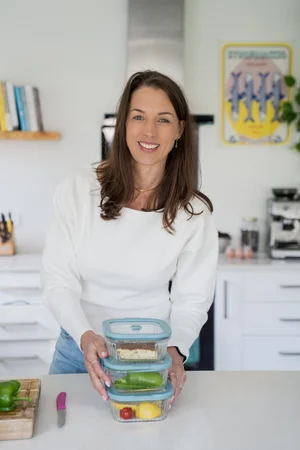
I know this personally. I was diagnosed with perimenopause at 37. And I’ll be honest with you — I thought I was too young. For about six months before I got answers, I genuinely felt like I was going insane. I knew something wasn’t right, but I couldn’t make sense of it. I was in the health and fitness industry. I knew bodies. I knew training. I knew nutrition. I knew stress mattered. I knew sleep mattered.
But this felt different.
And that is the part so many women struggle to explain. You can be doing “all the right things” and still feel completely unlike yourself. You can be eating well, training, working hard, showing up for your family, doing your job, trying to stay positive — and still feel like someone has quietly taken the old you and replaced her with a version you don’t recognise.
That is frightening. And when you are told it is just stress, or just ageing, or just life, it can make you question yourself even more.
This is why the conversation matters. Because the women in their late 30s, 40s and 50s right now are not a generation that has had the luxury of falling apart. We are the generation that has had to figure things out.
We have built careers.
Raised children.
Supported partners.
Managed households.
Cared for ageing parents.
Paid bills.
Made appointments.
Remembered everyone’s school events, dentist check-ups, passwords, food preferences, emotional needs, and where the clean socks are.
We have held a lot together. So when something feels off, we don’t just accept, “Well, this is your life now.” We research. We learn. We ask questions. We seek solutions. Not because we are difficult. Not because we are dramatic. Not because we want to be labelled with something.
But because we have spent our whole lives adapting, solving problems, and carrying on — and at some point, carrying on without answers is not good enough.
That is the real reason everyone is suddenly talking about perimenopause. It is not because it is trendy. It is not because women are looking for excuses. It is not because Instagram invented a new problem.
It is because women are finally saying, “I am not willing to feel exhausted, overwhelmed, anxious, inflamed, disconnected, and unlike myself and be told that is simply the price of getting older.”
And honestly, good.
Because ageing is a privilege, yes. But suffering in silence is not a requirement. Perimenopause can affect your sleep, mood, body composition, training recovery, appetite, confidence, patience, libido, motivation, mental clarity, and your relationship with yourself.
It can be subtle at first. It can come in waves. It can look different for every woman. And that is exactly why awareness matters. When you understand what is happening, you can respond differently.
You can stop punishing your body and start supporting it.
You can stop chasing the old plan that no longer works and start building one that meets you where you are now. You can look at nutrition, strength training, stress, sleep, hormones, boundaries, blood work, recovery, and support with a clearer head. You can stop making it a character flaw and start treating it like a real life stage that deserves real attention.
Because that is what this is. Perimenopause is not some made-up social media buzzword. It is a biological transition that half the population will move through in some way, and yet for far too long, women were expected to stumble through it quietly while still functioning at full capacity.
No wonder so many of us are angry. No wonder so many of us are tired. No wonder so many of us are relieved when someone finally says the thing out loud. This conversation is not about making women fear their bodies. It is about helping women understand their bodies. It is about saying, “You are not alone, and you are not imagining this.” It is about giving women the confidence to seek proper support, ask better questions, and make changes that actually fit this season of life.
So if you have been wondering why perimenopause is suddenly everywhere, here is my take: It was always here. Women were always experiencing it. They just weren’t always being heard. Now we are talking. We are comparing notes. We are calling out the vague answers. We are refusing to be fobbed off. We are learning what our mothers and grandmothers were never properly taught. We are getting stronger, clearer, and a lot less willing to shrink ourselves to make other people comfortable.
And if that makes this conversation feel loud? Good. Maybe it needs to be.
If this made you think, “This is me,” then please don’t ignore that. You do not have to panic, and you do not have to overhaul your entire life by Monday morning. But you do deserve to understand what is happening and what your next best step could be. If you would like support with your nutrition, strength, balance, and understanding what your body needs in this phase, you can book a clarity call with me and we can talk it through properly.